


What do patchwork quilts and U.S. abortion laws have in common? They both represent a mix of different, sometimes clashing, designs.
Understanding Abortion Legality: Legality Categories Explained
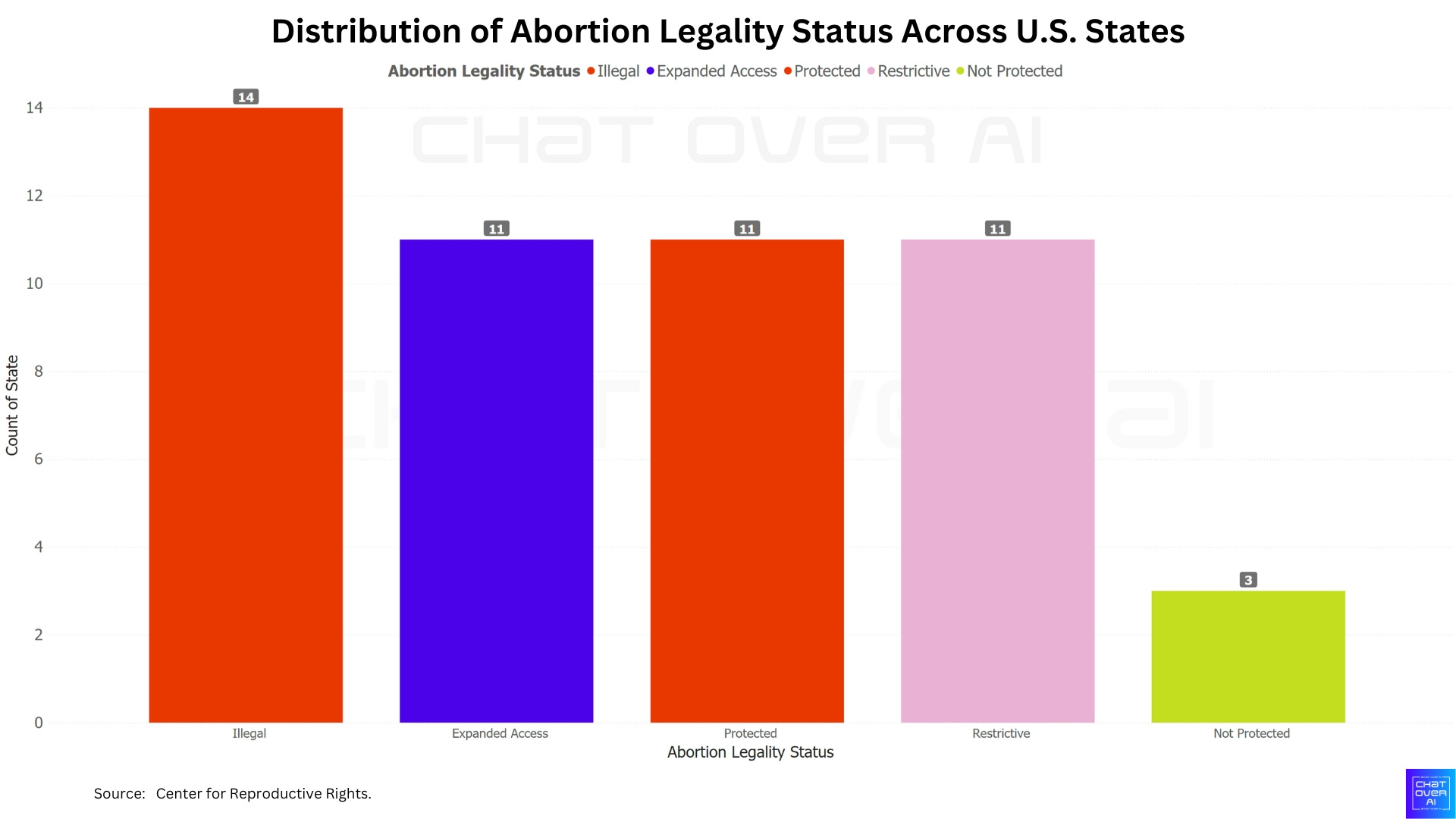
Here is a breakdown of the different legality statuses for abortion across U.S. states:
Expanded Access (11 states): Full access to abortion services without major restrictions—think of it as the VIP lounge of reproductive rights. No hurdles, just choice.
Protected (11 states): Abortion is legal, but expect a few hassles. It's like ordering a cheese pizza without any toppings—simple, but possible.
Restricted (11 states): Access allowed, but with plenty of obstacles. Imagine sneaking a bottle of water into a concert—it’s possible, but challenging.
Illegal (14 states): No access allowed—these states have essentially thrown up a “Closed” sign, making legal abortion nearly impossible.
Not Protected (3 states): Legal ambiguity reigns. It's like an undecided menu item—nobody really knows if it's available, and you may be waiting a while for an answer.
Thanks for reading Chat Over AI! Subscribe for free to receive new posts and support my work.
The Changing Landscape Post-Roe v. Wade
Ever since the overturning of Roe v. Wade, abortion legality in the United States looks less like a coherent policy and more like a confusing patchwork quilt. Depending on where you are, your rights can vary dramatically, much like guessing which episode of “Black Mirror” you’ll end up watching next—some uplifting, others downright dystopian.
A Tale of Three Categories
Broadly speaking, the states fall into three categories: those that have expanded access to abortion, those that have protected access without expanding it, and those that have restricted or banned it entirely. It’s like three different flavors of ice cream: some are chocolatey, some are vanilla, and others are, well, rocky road.
Expanded Access: A Few Bright Spots
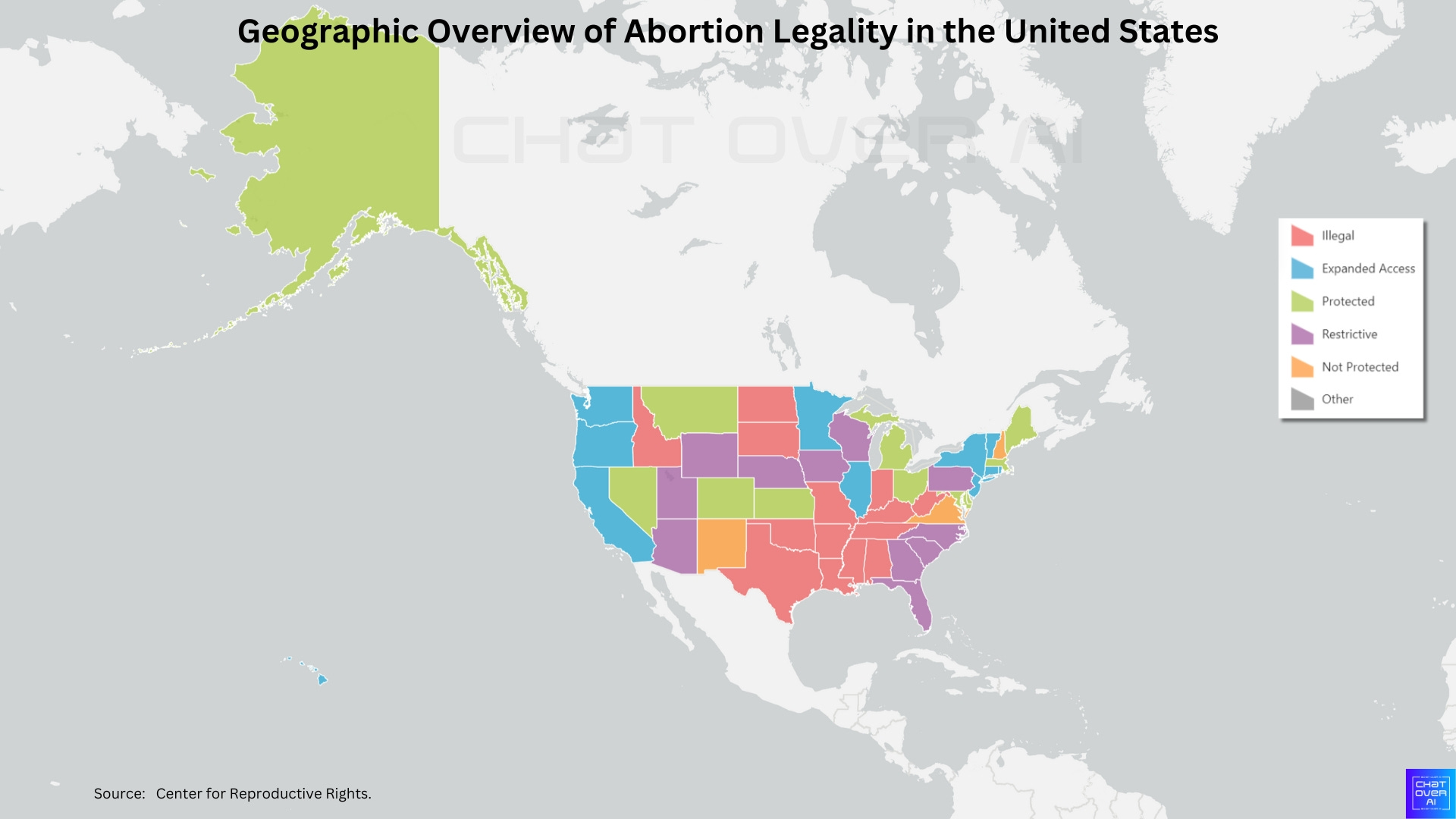
States like California, New York, and Illinois have opted to expand access to abortion, ensuring that reproductive rights are secure for residents. These states have essentially doubled down on protecting abortion access, much like a rebellious teenager sneaking out just because someone told them not to. Governors and state legislators in these regions have actively promoted policies to increase the availability of abortion services, emphasizing the importance of healthcare rights.
These states provide a beacon of hope for those seeking options, and have essentially put up a flashing neon sign that says, “Your body, your choice—no judgment here.” Minnesota, Oregon, and Vermont also fall into this category, treating abortion as a critical healthcare service deserving of full access.
Protected but Not Expanded: The Middle Ground
In states like Alaska, Colorado, and Nevada, abortion is protected, meaning that while there may be legal access, the availability isn't as extensive as in those with expanded access. It's like ordering a plain cheese pizza—sure, you get the pizza, but don’t expect any fancy toppings.
These states provide some level of reassurance to residents, though there are often practical challenges, such as fewer clinics and more waiting periods, that make accessing services less straightforward. It’s a delicate balance—trying to keep everyone somewhat happy while offending the least amount of people possible.
Restricted or Banned: The Conservative Wave
Then we have the states that have taken a restrictive or outright banning approach—places like Texas, Alabama, and Missouri. These states have implemented some of the strictest regulations, effectively making abortion illegal. It’s as if these areas have decided to turn back the clock to the pre-1970s, rolling out laws that make obtaining an abortion nearly impossible for most residents.
Many states under this category have seen a strong conservative push, driven by a mixture of religious beliefs, cultural traditions, and political agendas. Georgia and Florida, while not banning it completely, have imposed restrictive measures that make accessing abortion services a challenge akin to trying to sneak candy into a movie theater—it’s technically not impossible, but good luck.
Complex Realities on the Ground
The contrast between states is stark. For instance, if you live in Illinois, you might be only a short drive away from expanded access, whereas crossing the border into Missouri could mean facing a complete ban. It’s almost like an invisible force field that dictates what you can or cannot do based solely on your geography.
Professor Jane Doe, an expert in reproductive law, notes, “What we’re seeing now is a real-life geography lesson where your basic rights depend on your state’s position on the map.” It’s an unfortunate reality where individual rights and healthcare access hinge more on the whims of local legislatures than any standardized national policy.
Conclusion: A Nation Divided by Borders and Beliefs
In the wake of Roe v. Wade’s overturn, the United States has transitioned into an era of regional disparities when it comes to abortion access. What’s legal in one state might be a crime in the next, leaving citizens in a difficult position—some empowered by their state's progressive stance, and others grappling with a loss of autonomy over their own bodies.
The future of reproductive rights in America remains uncertain, as more battles are fought in courts and legislatures across the country. If you’re one of the lucky ones living in a state with expanded access, count your blessings. If not, well, America’s landscape just got a whole lot rockier—and not the fun ice cream kind.
If you have thoughts, stories, or opinions on this new era of reproductive rights, feel free to share them below. Just remember: stay respectful, and let’s keep it civil.
Data in the charts has been taken from Center for Reproductive Rights.