


Data Governance Frameworks & Regulations: The Global Playbook
AI is here to stay, but who makes sure it plays by the rules? Let's explore how data governance frameworks from across the globe ensure that AI isn't overstepping its boundaries.
When AI starts nosing around, sniffing for data to munch on, it's comforting to know that there are some pretty strict babysitters in place to ensure it doesn't get out of hand. These data governance frameworks and regulations are like the neighborhood watch—keeping an eye out for any sneaky AI that might be looking to grab more than it should.
Data Governance Frameworks Around the World
The world has seen a rising need for well-structured regulations to keep AI in check. Every region has its own approach to managing AI and data privacy, which creates a patchwork of frameworks to help us sleep better at night, knowing our personal information isn't going rogue.
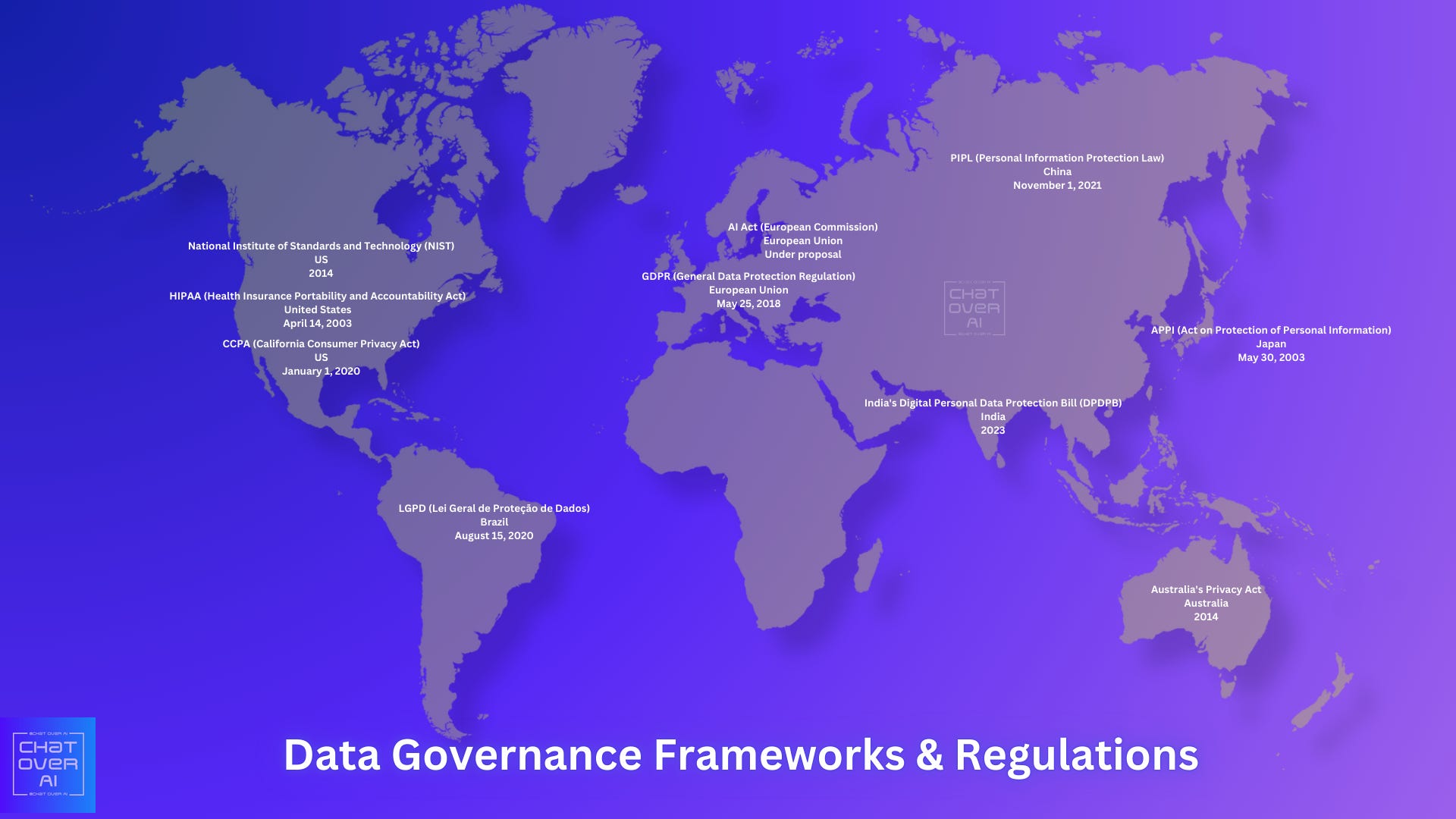
Let's look at some key data governance frameworks and regulations across the globe:
Thanks for reading Chat Over AI! Subscribe for free to receive new posts and support my work.
National Institute of Standards and Technology (NIST) - US (2014): NIST helps define standards for managing data safely, ensuring that data privacy is baked right into the process.
HIPAA (Health Insurance Portability and Accountability Act) - United States (2003): For our friends in the healthcare sector, HIPAA makes sure that medical data isn't just floating around willy-nilly.
CCPA (California Consumer Privacy Act) - US (2020): If you’re a Californian, you get to flex some privacy muscles, with rights to know what data is collected, why, and even ask companies to delete it.
GDPR (General Data Protection Regulation) - European Union (2018): The heavy hitter in data privacy, GDPR gives people unprecedented control over their data, with strict penalties for those who step out of line.
PIPL (Personal Information Protection Law) - China (2021): China’s privacy law, which has striking similarities to GDPR, lays down rules for how companies can collect, use, and share personal information.
India's Digital Personal Data Protection Bill (DPDPB) - India (2023): India joins the privacy squad, aiming to regulate data use, ensuring companies ask before dipping their hands into your data bowl.
Australia's Privacy Act - Australia (2014): This one makes sure Aussie data stays secure, with heavy emphasis on how personal information can be collected and used.
LGPD (Lei Geral de Proteção de Dados) - Brazil (2020): The LGPD is Brazil’s version of GDPR, ensuring data use remains ethical and transparent.
These frameworks are the guardrails to make sure AI isn't overstepping its bounds. But as you can imagine, the rules differ based on where you are, making it a bit of a mess—think of it as a party where everyone’s brought a different rulebook.
Best Practices for AI Privacy and Data Governance
So how do we make sure our data isn't being served as hors d'oeuvres at the AI banquet? While regulations help, it’s equally important for AI developers and companies to adopt best practices to protect user data. Here are some of the best practices for AI privacy and data governance:
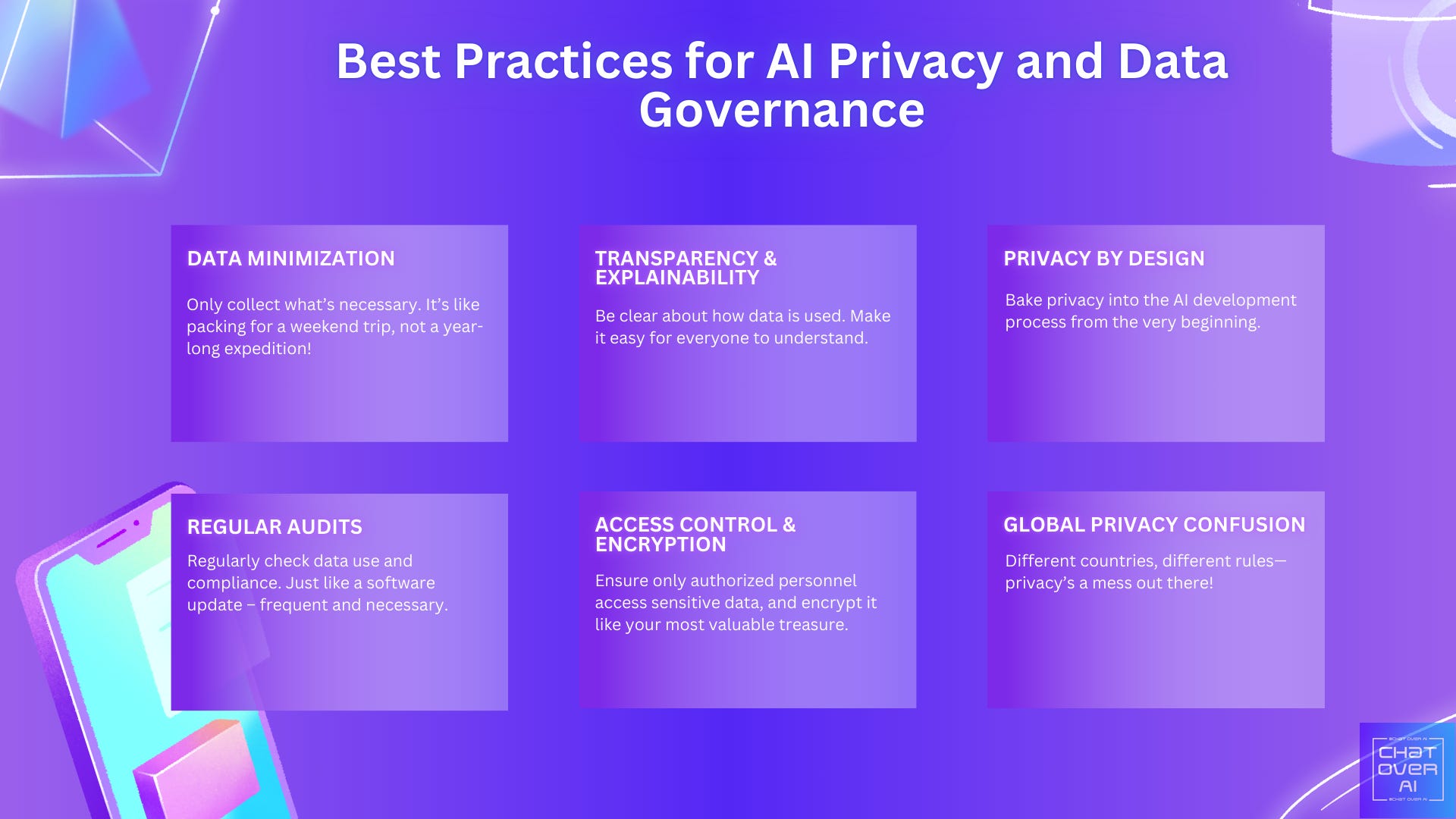
Data Minimization: Only collect what's necessary. Think of it as packing for a weekend trip—not like you’re moving out forever!
Transparency & Explainability: If AI wants your data, it should be crystal clear about why and how it’s going to use it. No one likes secrets, especially when it comes to their personal data.
Privacy by Design: Privacy should be baked into the AI system from the start—like adding chocolate chips into cookie dough before baking. It’s much harder to add them afterward!
Regular Audits: Just like doing routine maintenance on your car, AI needs audits to ensure data is used correctly and policies are being followed.
Access Control & Encryption: Restrict access to sensitive data and encrypt it like your most valuable secret—because it is!
Global Privacy Confusion: Different regions have different rules, and navigating them can be like trying to understand a foreign language. The solution? Be well-versed in local privacy laws and adhere strictly to them.
Why Do These Practices and Frameworks Matter?
As AI becomes more advanced, the ability to collect, process, and analyze data grows exponentially. It’s not just about keeping up with data protection laws—it's about making AI trustworthy. If we want to enjoy the benefits of AI without giving away our entire cookie jar, companies need to show responsibility and respect for user privacy. After all, nobody wants AI peeking where it doesn’t belong.
In a world increasingly driven by data, the best way to ensure we can safely embrace AI without compromising privacy is through solid governance frameworks and strong privacy practices. It’s about striking the right balance—making sure AI is helpful, not intrusive. After all, the cookies should be for you to share, not for AI to take.
Thanks for reading Chat Over AI! Subscribe for free to receive new posts and support my work.