


Industrial robots are spreading like butter on hot toast—thick and fast. But instead of competing to be the toastiest, countries are competing to be the most automated. Let's take a fun ride through the world of robotics and see who is truly winning the Great Robot Race. Spoiler alert: China has a few secret rocket boosters.
Chart 1: The Robot Championship
Imagine a boxing match, but instead of boxers, it's robots—lots of robots. China is, without a doubt, the heavyweight champion of the robot world, installing 290,300 industrial robots in 2022. That's a number so big it makes other countries look like they forgot to put on their gloves. To put it in perspective, China installed 5.8 times more robots than Japan (50,400) and a whopping 7.4 times more than the United States (39,500). Sorry, USA, but your bots need a boost.
Thanks for reading Chat Over AI! Subscribe for free to receive new posts and support my work.
South Korea and Germany followed in the competition, with 31,170 and 25,600 robots installed, respectively. While they may not have China’s firepower, they’re still throwing punches in the automation arena. It's like China brought a flamethrower to a water gun fight—not exactly a fair match.
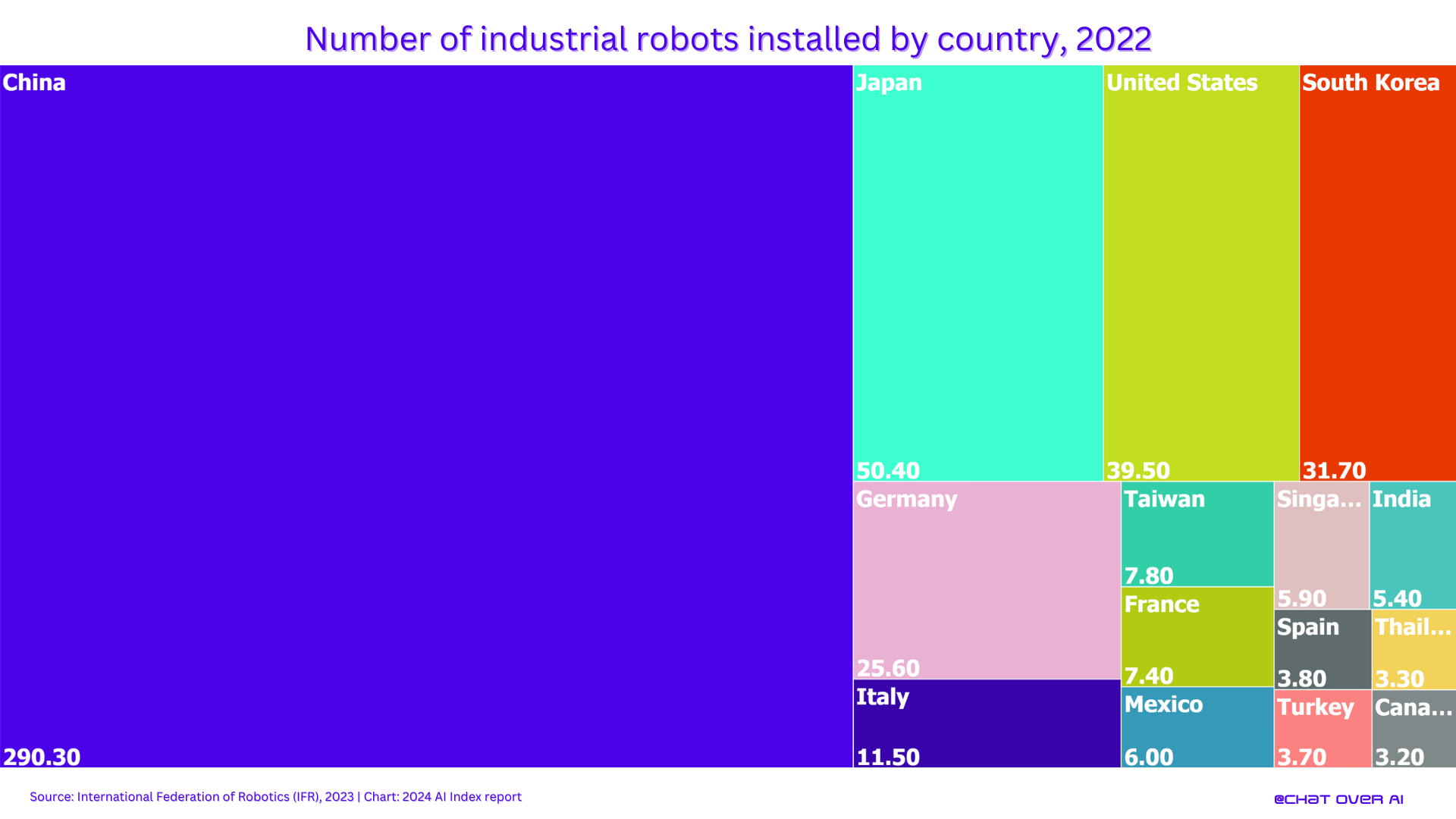
Chart 2: Global Heatmap of Robot Installations
Chart 2 offers a visual where we can literally see the heat of the competition. The heatmap might as well be a flashing neon sign that says, "China Wins." Other countries, like Japan and South Korea, show up on the map like solid contenders, but China’s bright purple spot is the kind of thing that makes every other nation look like they missed the memo about the importance of automation. United States and Germany? They’re there, just a bit quieter—no need to draw too much attention, I guess.
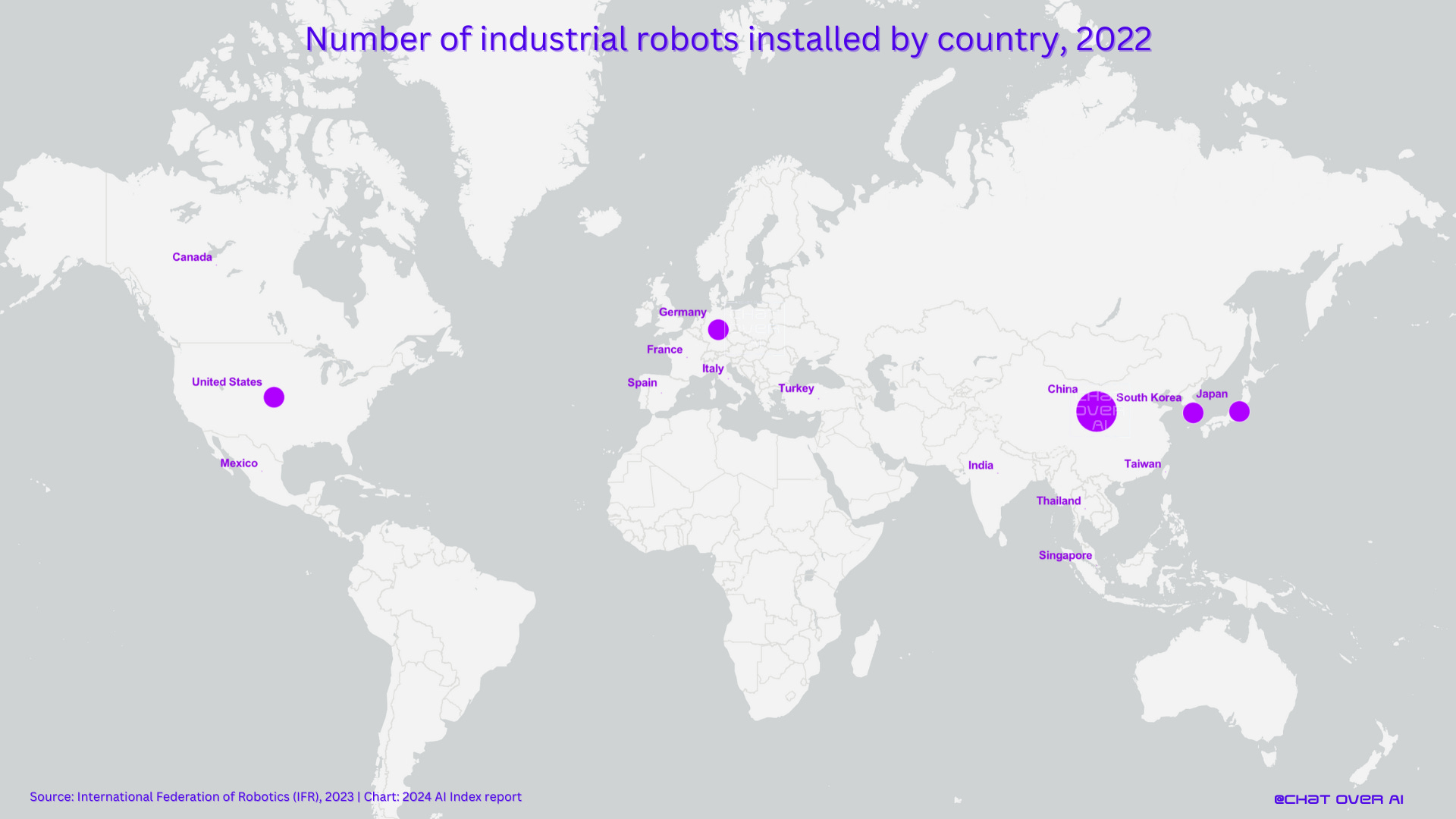
Chart 3: A Decade of Domination
If you're wondering whether China has always been this obsessed with robots, Chart 3 has the answer—spoiler: yes, since at least 2013. In the last ten years, China hasn’t just kept pace with the competition; they’ve completely lapped everyone. In 2013, they took over from Japan as the leader in robot installations, accounting for 20.8% of the global share. Fast forward to 2022, and they’re dominating with 52.4% of global installations. To put it bluntly, China is installing more industrial robots than the rest of the world combined—a gap that only seems to be widening.
It’s kind of like watching a marathon where the lead runner starts taking pit stops to install more running shoes on their feet while the others are still struggling with their laces. China is strapping on more and more “robot shoes,” and before long, the rest of the runners are going to need to start carpooling just to keep up.
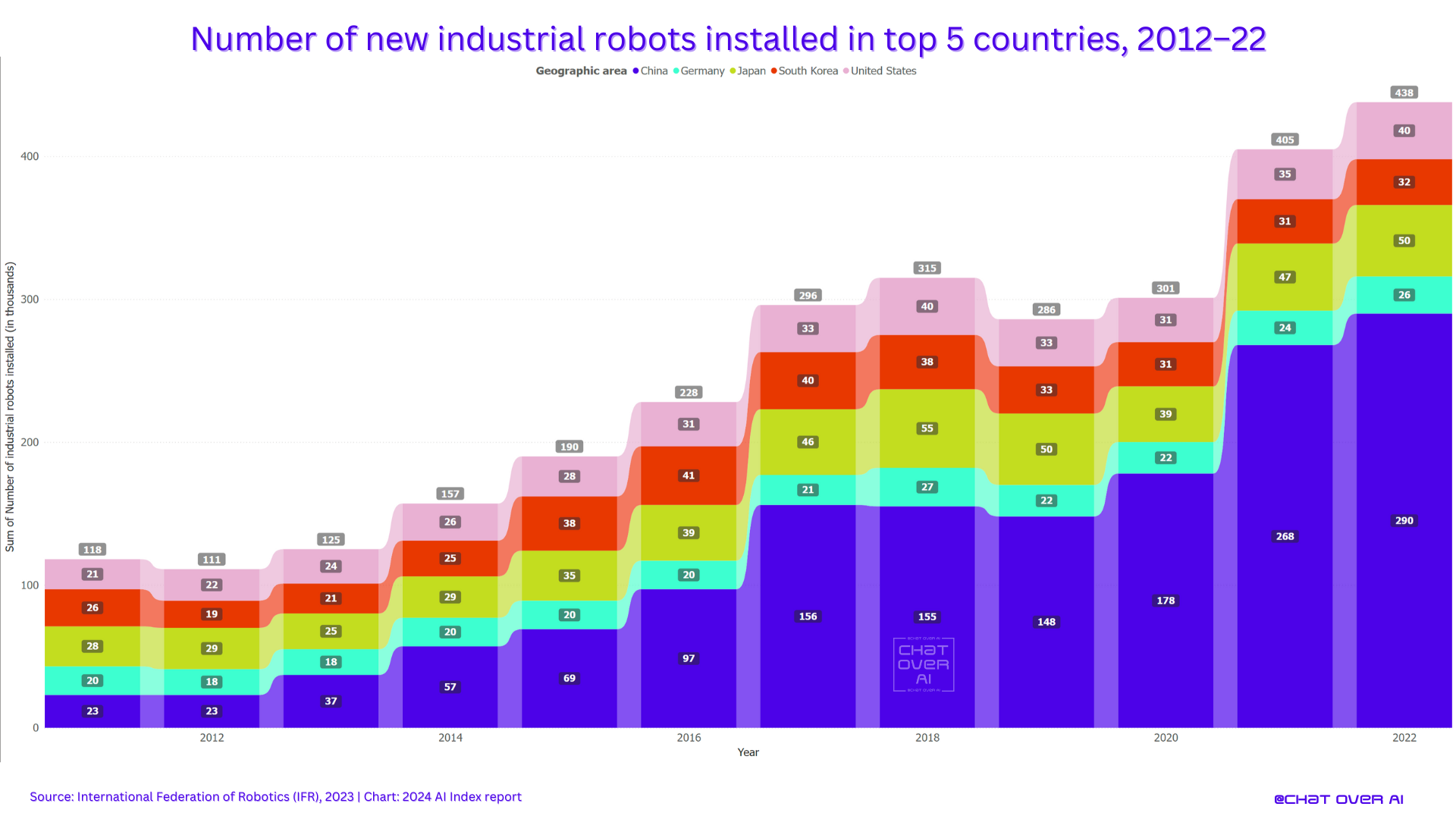
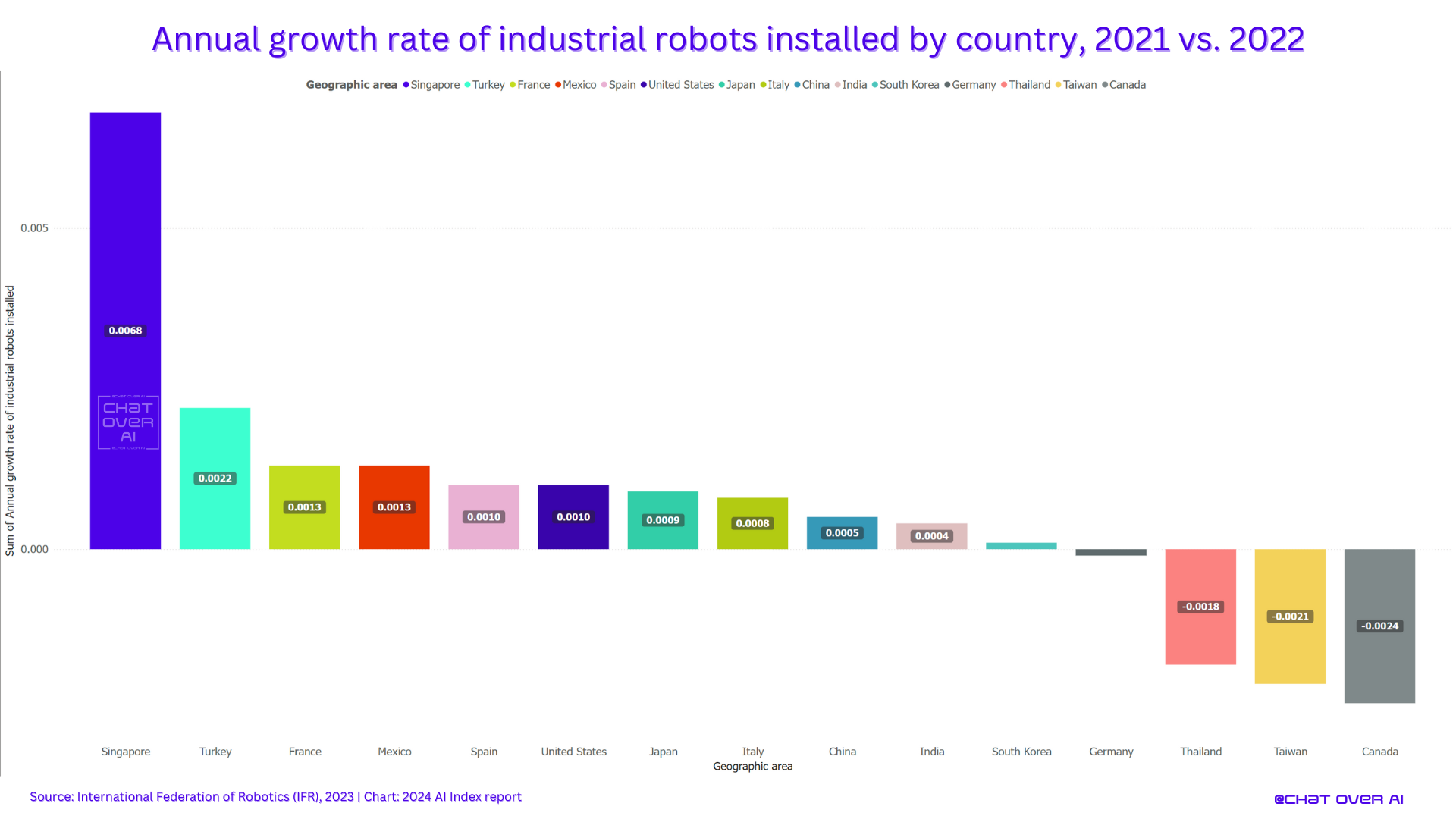
Chart 4: Who's Growing Faster? And Who's Slowing Down?
If Chart 3 had you convinced that every country was just sitting back and watching China steal the show, Chart 4 offers a twist. While most countries have been trying to keep up, Singapore had a 68% growth rate in robot installations from 2021 to 2022. Singapore might be small, but they’re clearly very committed to being future-ready (or perhaps just very committed to having robot bartenders). Turkey (22%) and Mexico (13%) are also catching some serious steam.
On the flip side, Canada, Taiwan, and Thailand are letting their robots take a bit of a breather. Canada saw a 24% decrease in installations, while Taiwan and Thailand were not far behind with -21% and -18%, respectively. We can only hope their robots are recharging and getting ready for a comeback—otherwise, it might be hard to keep up in the fast-moving world of automation.
What Does It All Mean?
The numbers paint a picture of a world where everyone is hustling to get their robot game up—and China is doing a victory lap while installing a million more. If there’s one thing these charts tell us, it's that automation is no longer the future—it’s very much the present, and some countries are embracing it more enthusiastically than others.
With Singapore jumping in with rapid growth and Turkey and Mexico riding the wave, the message is clear: adapt or get left behind. Meanwhile, Canada might want to figure out why its robots are feeling less motivated. Maybe it’s all the maple syrup slowing them down.
The Great Robot Race isn't just about having more robots—it's about staying ahead in innovation, efficiency, and the global economy. And while China has taken the lead, there are plenty of other contenders who could come back with a twist. We’ll just have to sit back, grab some popcorn, and watch as more countries join the race to create a world where robots do the heavy lifting—literally.
Conclusion: Ready, Set, Automate!
So, next time you hear about automation, don’t think of it as a far-off dream or a sci-fi plot. Instead, imagine a global race where every country is trying to outdo the other by adding more and more robots to their team. And while China is definitely in pole position, there’s still room for others to catch up. Who knows, maybe the next great innovator will come from a surprising underdog. Either way, we humans get to sit back and let the robots do the hard work. Sounds like a win-win to me.
Thanks for reading Chat Over AI! Subscribe for free to receive new posts and support my work.